The global expedition vehicle sector is experiencing unprecedented growth, driven by a surge in overland travel and off-grid camping. For RV dealerships, custom 4×4 upfitters, and fleet importers, this shift represents a highly lucrative B2B opportunity. However, succeeding in this space requires more than just importing generic RVs. It demands highly specialized inventory tailored to strict regional environments and regulatory frameworks—specifically the rugged outback of Australia and the precision-driven, weight-restricted market of Germany.
This guide provides a comprehensive breakdown of the slide-on camper (and flatbed camper) wholesale market. By understanding the distinct engineering requirements of Ute canopy campers and European Absetzkabinen, importers can optimize their product offerings, ensure local compliance, and significantly widen their profit margins.
The Expanding Global Market for Pickup Truck Campers
Historically, the recreational vehicle market was dominated by towable caravans and massive Class A or C motorhomes. Today, consumer preference has shifted sharply toward agility. Buyers want to navigate tight bush tracks, conquer corrugated roads, and park in standard urban spaces without sacrificing living comfort.
This demand has elevated the pickup truck camper shell from a niche product to a mainstream overland necessity. As an OEM/ODM importer, sourcing direct from a reliable manufacturer like CoreCampers allows you to capture this demand while bypassing the inflated costs of domestic manufacturing. The “blue ocean” strategy here lies not in selling fully finished luxury rigs, but in supplying specialized, modular, and compliant camper bodies to regional markets.
Decoding Regional Demands: The Australian Outback vs. the European Alps
A camper shell that sells out in Munich will likely fail in Queensland if it isn’t engineered for the local context. B2B buyers must specify their OEM orders based on distinct regional characteristics.
Australia: Engineering the Unbreakable Ute Canopy Camper
In Australia, the environment is the ultimate stress test. Vehicles endure thousands of kilometers of severe corrugations (washboard roads), bulldust, and extreme heat. The dominant vehicle platform is the “Ute” (utility vehicle) equipped with a flat aluminum tray, rather than a traditional tub.
When ordering wholesale slide-on campers for Australia, dealerships must prioritize structural integrity over absolute weight savings. The camper must feature a torsion-free subframe mounting system. If a camper is rigidly bolted to a 4×4 chassis, the twisting forces of off-road articulation will literally tear the composite walls apart.
Furthermore, dust sealing is paramount. Australian buyers demand positive pressure cabin systems to keep ultra-fine red dust out of the living quarters. From a regulatory standpoint, all imported campers must support compliance with Australian Design Rules (ADR), particularly concerning rear overhang limits, lighting visibility, and Gross Vehicle Mass (GVM) upgrades.
Germany: The Rise of the Lightweight Absetzkabine
The German market presents a contrasting set of engineering challenges. Here, the pickup truck (often a Ford Ranger, VW Amarok, or Toyota Hilux) is usually driven with its original factory tub. The camper—known locally as an Absetzkabine or Wohnkabine—must slide into this tub and be easily demountable using jack stands.
The critical metric for German importers is payload capacity. European driver’s licenses often restrict users to a 3.5-tonne total vehicle weight. Therefore, wholesale camper shells destined for Germany must utilize ultra-lightweight materials, such as XPS vacuum-bonded fiberglass composite panels.
Additionally, German consumers utilize their campers year-round, requiring rigorous winterization. This means B2B orders must specify 4-season thermal insulation, double-glazed acrylic windows, and zero thermal bridging to prevent condensation in sub-zero Alpine conditions. Compliance with TÜV standards for secure cargo lashing and electrical safety is non-negotiable for regional distributors.
Blue Ocean Strategy: Importing Leerkabine (Empty Camper Shells)
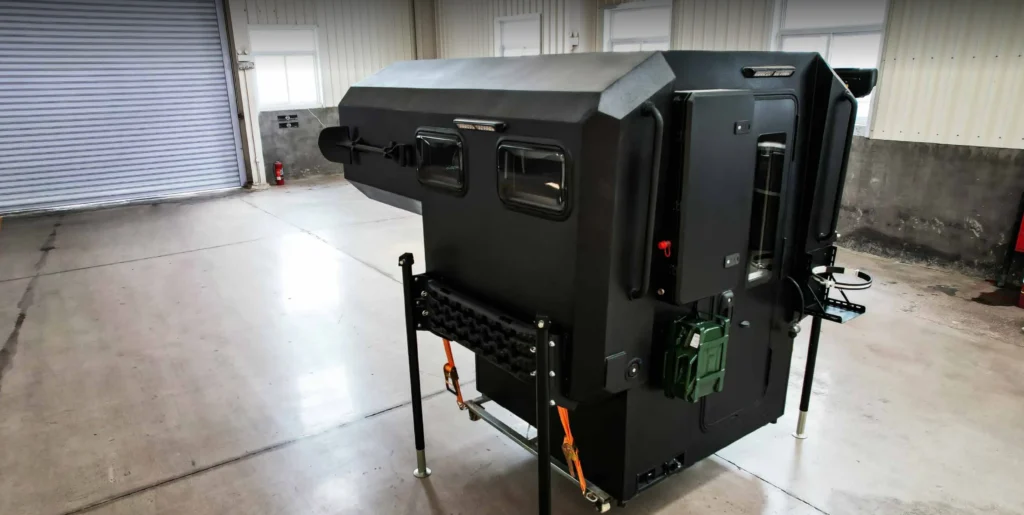
One of the most profitable, yet under-utilized, strategies for B2B importers is sourcing Leerkabinen (empty camper cabins). Rather than importing fully fitted campers—which incurs higher import duties, complex plumbing/gas certifications, and higher shipping weights—dealerships can import raw, weatherproof composite shells.
By sourcing empty shells from CoreCampers, local upfitters in Australia or Germany can install the internal cabinetry, solar arrays, and plumbing themselves. This allows businesses to market the final product as “Locally Assembled” or “Custom Built,” catering directly to the high-end bespoke market while maintaining massive margins on the imported structural shell.
Why Partner with CoreCampers for Your OEM/ODM Manufacturing?
Choosing the right factory partner dictates your success in the overland market. CoreCampers specializes exclusively in expedition-grade habitats. We do not build fragile highway RVs; we build high-density, off-road resilient structures.
Our B2B partners benefit from:
- Custom Dimensions: Tailored molds to perfectly fit standard Euro double-cabs or extended Australian Ute trays.
- Advanced Composites: We utilize 30mm to 60mm structural composite walls offering exceptional shear strength and thermal retention.
- White-Label ODM: Your branding, your specific feature requests, our reliable manufacturing lines.
For RV dealerships, custom builders, and overland equipment distributors ready to dominate their local markets, securing a reliable supply of high-quality slide-on campers is the critical next step.
Contact the CoreCampers wholesale team today to discuss container pricing, bespoke mold designs, and exclusive regional distribution rights for your territory.